Shape Notes
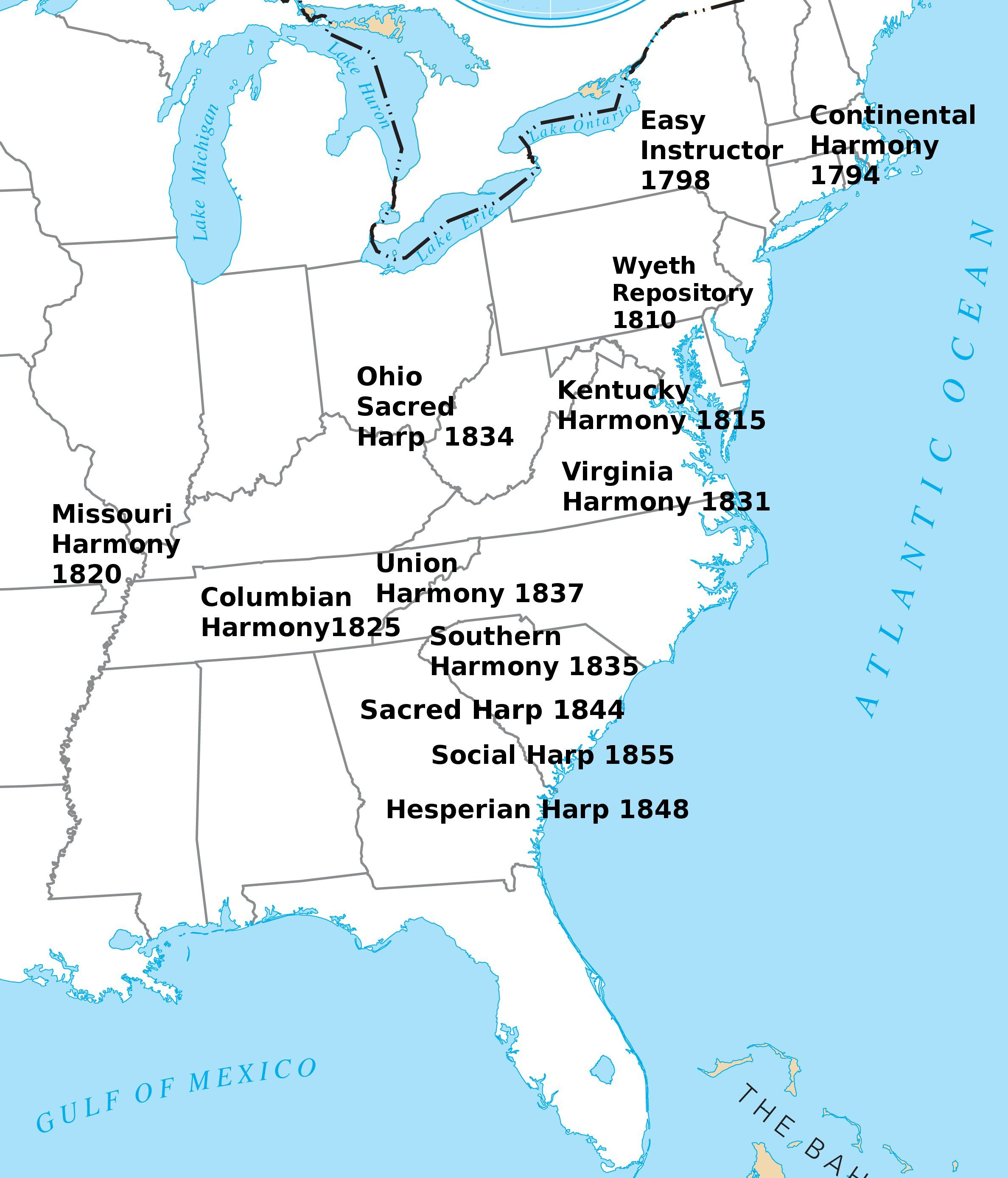
In 1801 Little and Smith published The Easy Instructor. This new song book used a notation with shaped note heads to make solmization easier to learn. This system of shape notes became popular in rural America, especially in the South, and was used by at least twenty different song books between 1800 and 1860. These books were generally oblong in shape. They started with a rudiments section which presented the basics of music theory, as used in shape note songs. The songs were usually arranged in four parts, and occasionally in three or two parts. The songs in these books were of three basic types: Hymns, Anthems (or Odes) and Fuging Tunes. Hymns are short tunes, with multiple verses that are set to a hymn meter. The anthems are longer pieces that often change meter throughout, intended for public performance. Fuging tunes in shape note music are not strictly imitative, but present sections of music with successive voice entrances.
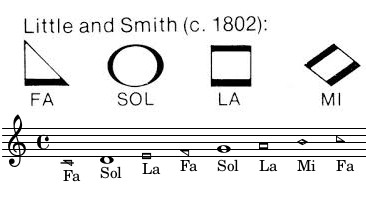 Later in the 19th century, as people began to sing more in do-re-mi solmization, notation systems using seven shapes became popular.
Two of the most enduring of these books have been William Walker's Christian Harmony and Marcus Lafayette Swan's New Harp of Columbia.
Later in the 19th century, as people began to sing more in do-re-mi solmization, notation systems using seven shapes became popular.
Two of the most enduring of these books have been William Walker's Christian Harmony and Marcus Lafayette Swan's New Harp of Columbia.
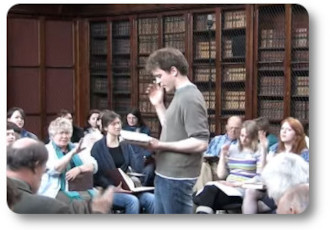
Hymn
Hallelujah - Wm. Walker 1835
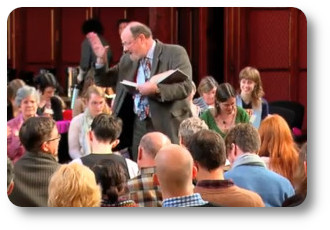
Anthem
Easter Anthem - Wm. Billings 1787
Fuging Tune
Stratfield - Ezra Goff 1786