The Sacred Harp - A brief overview
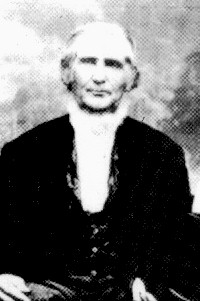 The Sacred Harp is the most enduring and popular of the 19th century shape note song books still sung today. Published in 1844 by
B.F. White
of Hamilton, GA, The Sacred Harp embodies an earlier tradition of shape note singing that started in New England and spread to the South and West as the United States grew. In time, as other musical movements supplanted shape note singing elsewhere in the country, the South became a haven for this older musical practice. The shape note singing tradition draws from America's earliest original compositions, as well as popular folk songs, ballads and fiddle tunes from the time. These tunes were arranged in a distinctive style, referred to as dispersed harmony, distinguishing this music from mainstream European music of the time.
The Sacred Harp is the most enduring and popular of the 19th century shape note song books still sung today. Published in 1844 by
B.F. White
of Hamilton, GA, The Sacred Harp embodies an earlier tradition of shape note singing that started in New England and spread to the South and West as the United States grew. In time, as other musical movements supplanted shape note singing elsewhere in the country, the South became a haven for this older musical practice. The shape note singing tradition draws from America's earliest original compositions, as well as popular folk songs, ballads and fiddle tunes from the time. These tunes were arranged in a distinctive style, referred to as dispersed harmony, distinguishing this music from mainstream European music of the time.
Two notation systems are used in the song books. The first type, the original shape note style, uses a four shape notation. 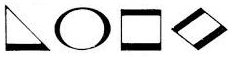 This is referred to by singers as "fasola" singing, after the names of the shapes and the solmization system used. Later, seven shape systems were created to represent modern "do re mi" solmization.
Shape note singing is done a cappella, in a square seating arrangement, with one side for each of the four voices: treble, alto, tenor and bass. Singers take turns leading songs in the center of the square, referred to as "the hollow square." They will call out the song number they have selected to sing, sometimes referred to as a "lesson." The pitcher, who is usually in the front row of the tenor section, will sing out the starting pitches of the song. The group will then begin singing to the leader's direction. Often singers in the center and elsewhere will beat along with the leader to help convey the pulse through the group.
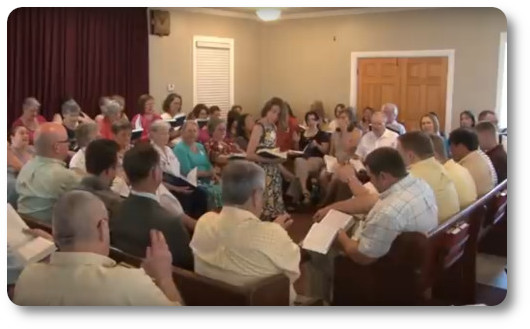
Amazing Grace - 2006 TX Sacred Harp Convention