Judge Jackson
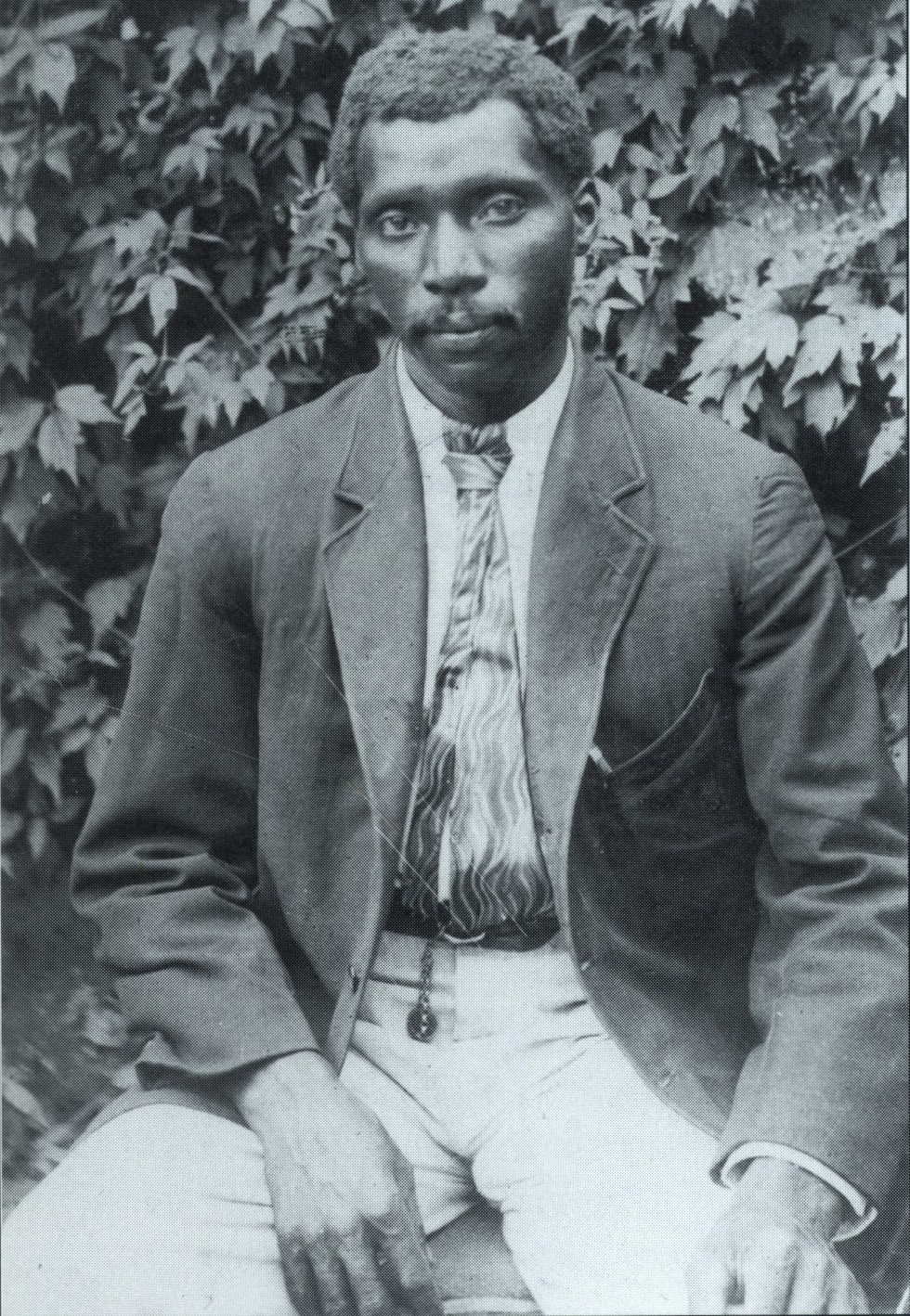
Judge Jackson was publisher of The Colored Sacred Harp (1934). Like other song books before it, The Colored Sacred Harp is a compilation of Jackson's own compositions, other extent songs, and songs written by Jackson's associates from that time. It forms the most unique collection of original songs written in four shape notation since John G. McCurry's Social Harp in 1855. Many of the songs in The Colored Sacred Harp involve more complex rhythms than are typically seen in earlier shape note song books. The song "Florida Storm" is a good example of this. His best known song, "My Mother's Gone," has been included in the Cooper edition of The Sacred Harp for many years.
The Judge Jackson Memorial Sing is held on the third Sunday in April at Union Grove Baptist Church. Ozark Alabama
Judge Jackson was born March 12, 1883 in Montgomery Co Alabama, the son of Aaron and Silvy Jackson and the youngest of their four children. The Jacksons worked as share croppers. When he was eight years old his mother died. In his autobiography Judge Jackson recounted leaving home to work on his own when he was sixteen.
I put my clothes in a small sack, and with only fifty cents I left home. This was the first Sunday in January, 1899. I stayed with my sister Ida and my brother Squire in Troy, Alabama that Sunday night.
Judge Jackson eventually traveled to the area of Ozark, Alabama and found employment. There he encountered Sacred Harp "songsters." A boyhood friend of Jackson, W. Columbus Sistrunk, remembers attending singing school and passing on his knowledge of Sacred Harp singing to Jackson.
Mr. Dickerson worked Judge hard and wouldn't let him go to Sacred Harp singing school that Gardner Griffin, a colored man, taught at Old Salem Church. But I was working for my grandfather and he wanted me to attend. So, Judge would come over to our house every night to see what I had learned at singing school. He and I would get down by the fireplace and go over each day's lesson. I still remember the first song we sang - "The Morning Trumpet." He was a better songster than I was; He taken singing as a treasure and just kept on keeping on. [Judge Jackson and the Colored Sacred Harp by Joe Dan Boyd, pg 33]
Judge Jackson's son Japheth remembered his father gathering with other singers in a town square in Ozark, Alabama to learn to sing.
He got all the information he could from anybody he could. White singers would visit the colored sings and he'd ask some of them questions. There were other places he could get information. For instance, in those days nearly everybody bought groceries on Saturday and that's when the rural people came to town. Songsters would meet on the square in Ozark to sing Sacred Harp songs - colored and white together. It wouldn't be a crowd, just a few at a time. Several would stop to listen. Anytime like that, he'd be likely to ask some questions. And before we got so many colored conventions organized, my daddy said they used to form little choirs that would go around and sing at different places. [Judge Jackson and the Colored Sacred Harp by Joe Dan Boyd, pg 34]
In 1902 Judge Jackson married Miss Lela Campbell. The account by Lela of their first meeting is quite remarkable. A lady who had come to town for a wedding was taking a bath next to a fireplace. Her hair caught on fire, and the people around her had trouble putting the flame out. Judge Jackson noticed the commotion and took the bucket of water that Lela had drawn from a well across the road and dowsed the fire out with it. Lela went on to tell:
Later on the white girl asked me the name of the boy who had saved her life, but I didn't know. I found out for her, and she sent him a nice jacket and told me that she would never forget him. I guess we started courting a month or so after that and got married October 2, 1902 at my daddy's house in Mabson. [Judge Jackson and the Colored Sacred Harp by Joe Dan Boyd, pg 31]
Eventually Judge Jackson learned enough of Sacred Harp to teach singing schools and create his own original compositions. The compositions that he left to us span the time frame from 1904 to 1933 before he published The Colored Sacred Harp.
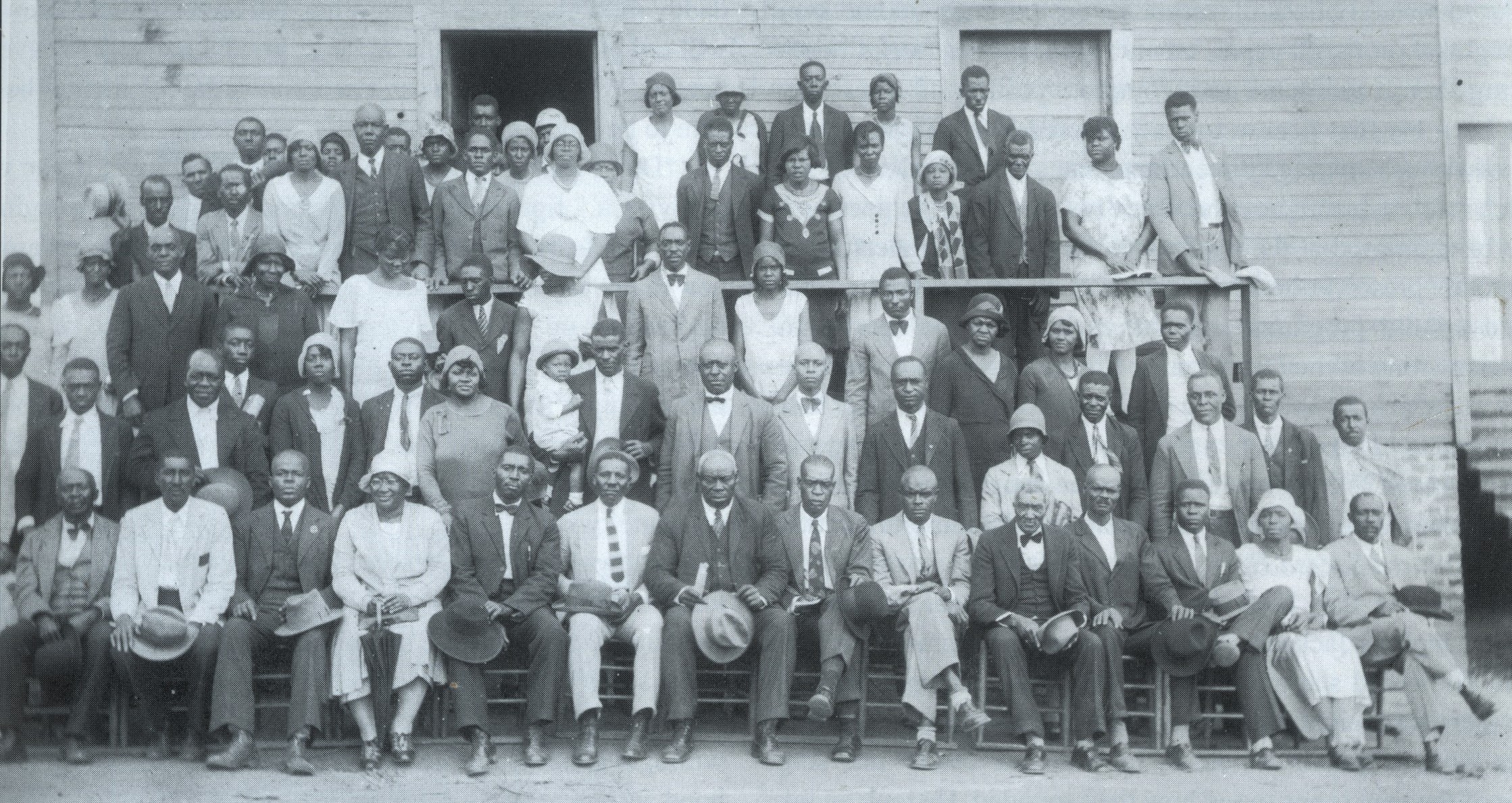
Singers of the Shady Union Convention at Enterprise AL, 1931